Bird of Interest: Baird's Sandpiper
01 // Bird of Interest
Baird's Sandpiper
Calidris bairdii
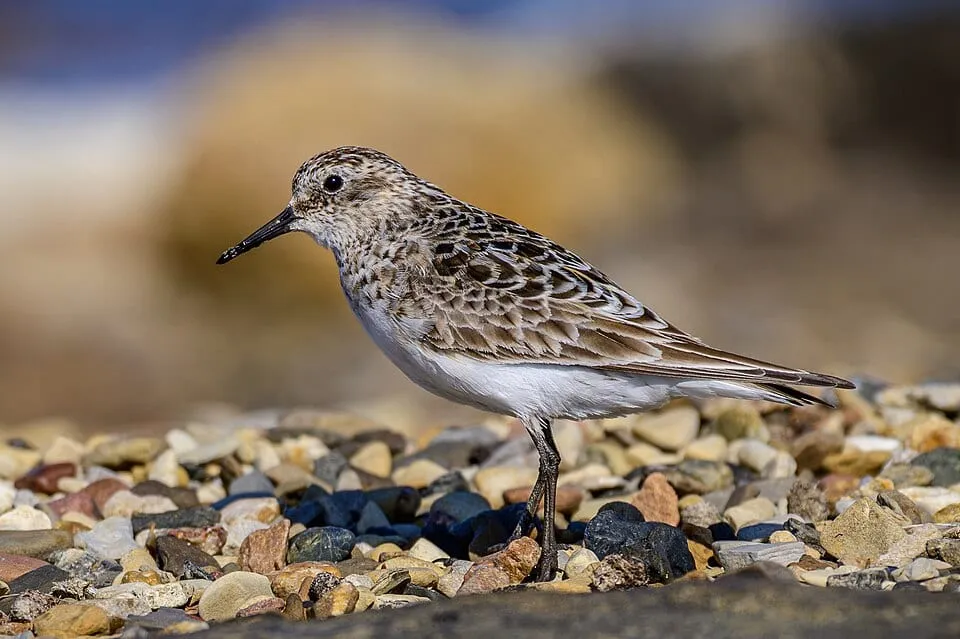
Photo: Stephan Sprinz / CC BY 4.0

Bird ID
This week's Bird of Interest is the small shorebird, Baird's sandpiper (Calidris bairdii). Intel confirms this species is part of the Calidris genus, which absorbed Erolia in 1973, and the genus name itself traces back to an Ancient Greek term used by Aristotle.
Visual signatures
- Black legs and a short, straight, thin dark bill.
- Long wings that extend beyond the tail when the bird is on the ground.
- Dark brown upperparts contrasting with a mainly white underside and a black rump patch.
- Head and breast are light brown, marked with dark streaks.
Acoustic signatures
Collection gap — use the audio links below.
Listen: xeno-canto · eBird species page
Pattern of life
- Nests on the ground, typically in dry locations with low vegetation.
- Forages by moving across mudflats, locating food visually.
- Diet is composed mainly of insects, supplemented by small crustaceans.
- Classified as a long-distance migrant.
F2T — where it's been reported (Clark County, last 30 days)
- Henderson Bird Viewing Preserve — last reported 02 Oct
Decoys (look-alikes)
- White-rumped sandpiper: Distinguished by its namesake white rump patch.
02 // Bird Order of Battle
206 species reported across Clark County in the last 7 days. Notable sightings (rare or out of season) flagged by eBird:
| Bird | Location | Date |
|---|---|---|
| Yellow Grosbeak | Clark County | 15 Oct |
| Rock Pigeon | Floyd Lamb Park at Tule Springs | 15 Oct |
| Ash-throated Flycatcher | Henderson Bird Viewing Preserve | 15 Oct |
| Hammond's Flycatcher | Desert NWR--Corn Creek (Field Station) | 14 Oct |
| Gray Flycatcher | Desert NWR--Corn Creek (Field Station) | 14 Oct |
| Purple Finch | Searchlight Park | 14 Oct |
| Lawrence's Goldfinch | Searchlight Park | 14 Oct |
| Golden-crowned Kinglet | Floyd Lamb Park at Tule Springs | 14 Oct |
Source: eBird.org
03 // Migration Estimate
Fall migration is underway, bringing passage migrants and winter visitors. Possible arrivals include the Common Loon and Red-breasted Merganser, while summer visitors such as the Willow Flycatcher and Indigo Bunting appear to have moved on. Keep an eye out for these signatures as the season progresses.
Possible arrivals
- Burrowing Owl
- Common Loon
- Red-breasted Merganser
Possible departures
- Willow Flycatcher
- Solitary Sandpiper
- Hermit Warbler
- Hooded Oriole
- Indigo Bunting
- Broad-tailed Hummingbird
- Calliope Hummingbird
From eBird reports compared with the same weeks last year. Reporting is uneven, so treat these as indicators, not a census.
04 // NAI of the Week
Corn Creek, Desert National Wildlife Refuge
The site is an ideal staging ground, offering springs, ponds, and old trees in the open desert—a natural magnet for migrants in the Mojave. Expect high activity and excellent signatures, with recent reports including Steller's Jay, White-faced Ibis, and Anna's Hummingbird. This area is a prime zone for pattern of life observation.
114 species reported here in the last 14 days, including:
- American Pipit
- Anna's Hummingbird
- Barn Swallow
- Black-headed Grosbeak
- Black-throated Gray Warbler
- Brewer's Blackbird
- Cassin's Vireo
- Clark's Nutcracker
05 // Bird VR
Make the call. Answer in next week's BINTSUM.
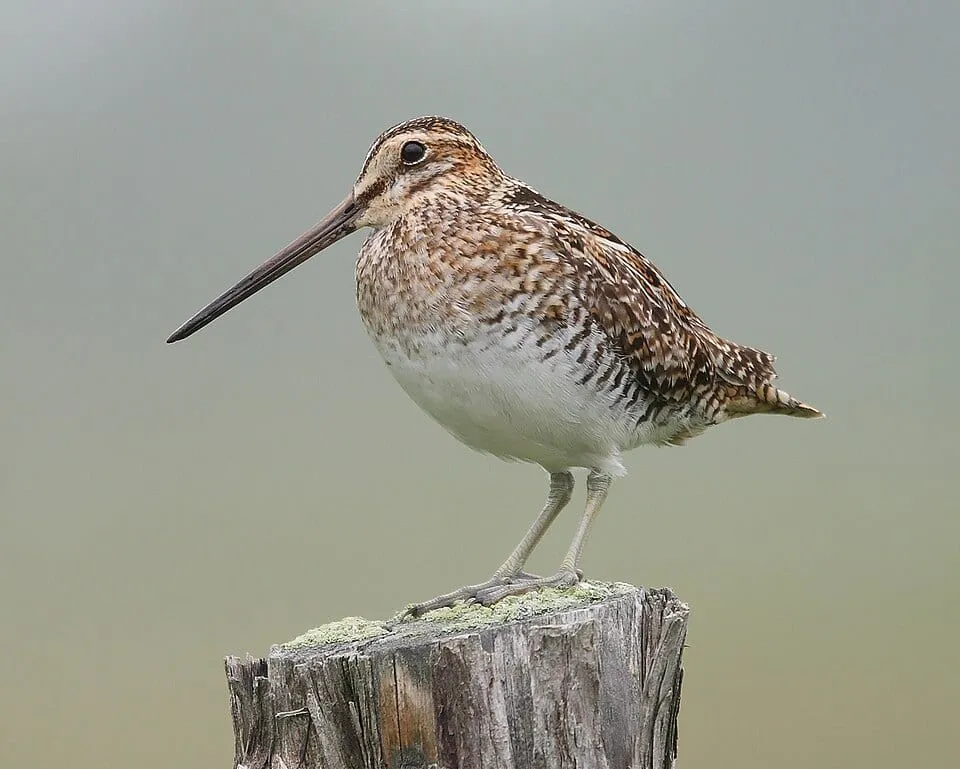
Photo: Mdf, derivative work by Donkey shot / CC BY-SA 3.0
- A. Black-and-white Warbler
- B. Ladder-backed Woodpecker
- C. Wilson's Snipe
Last week's answer: Lesser Nighthawk
06 // TTP of the Week
Exploit the morning window
Bird activity peaks in the first few hours after sunrise, especially in desert heat. The same spot that looks empty at noon can be full of movement at 0630.
Sighting data provided by eBird.org. Bird facts adapted from Wikipedia (CC BY-SA 4.0); photos from Wikimedia Commons, credited under each image. Written by a local AI model, so double-check anything that matters.
Bird of Interest
Baird's Sandpiper
Calidris bairdii
Positive Bird ID- Small sandpiper, about 5 to 6 inches long, with black legs and a short, straight, thin dark bill.
- Long wings reach past the tail when it stands. Only White-rumped Sandpiper also shows this, and it has a white rump patch.
- Dark brown above and mainly white below, with a light brown, streaked head and breast and a black rump patch.